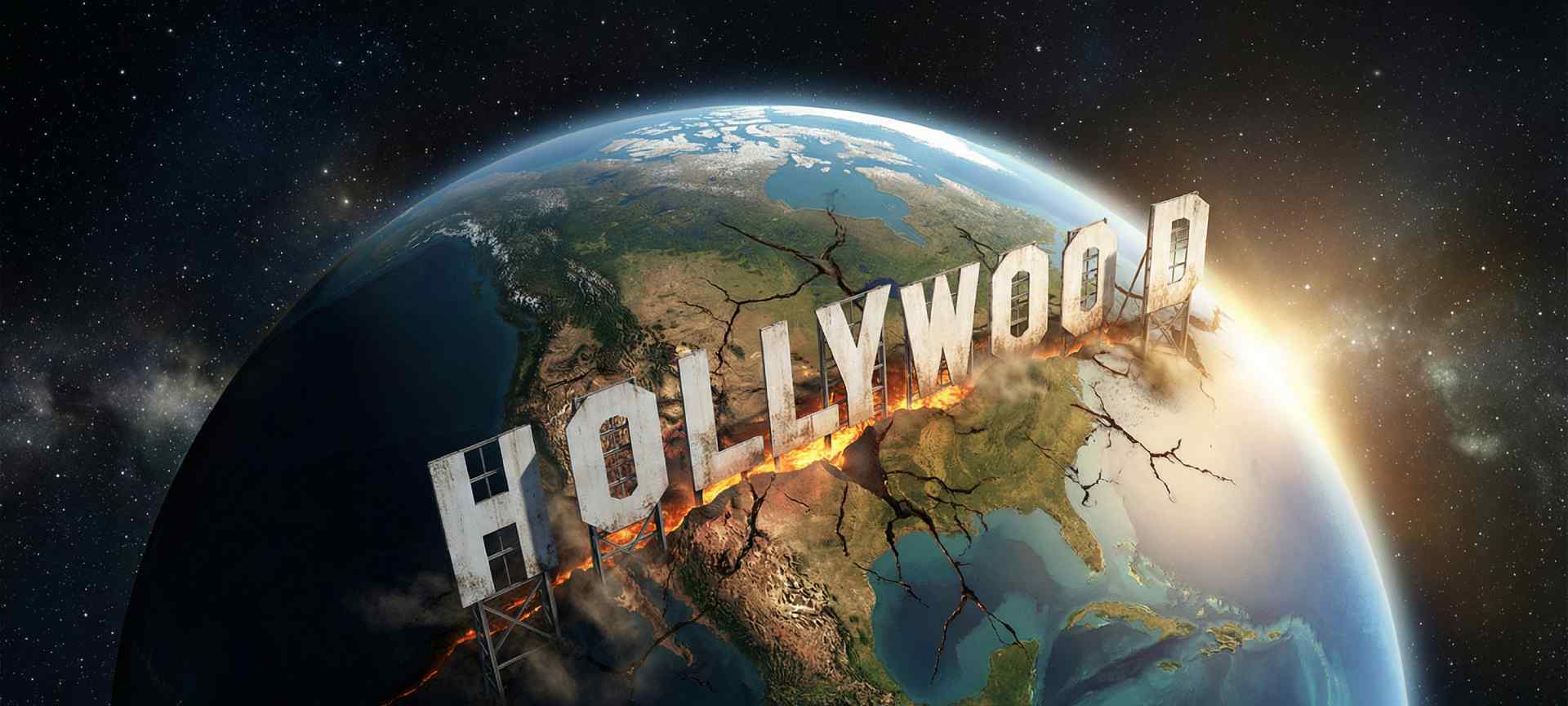
Hollywood vs The World: Film Discussion Club With Matthew Harris
N/A 180 mins

N/A 180 mins
Hollywood vs The World - Film Discussion Club
Twisted Tales: Modern Mythology of the 1980s
Myths do not die. They mutate.
In the 1980s, three filmmakers from three continents reached into the oldest stories their cultures possessed and pulled out something urgent, strange and unresolved. Not the comfortable mythologies of the Hollywood tradition, sanitised for family consumption, but folklore in its original register: dangerous, transformative, and shot through with genuine darkness.
Return to Oz (Walter Murch, USA, 1985)
The film Disney didn't know it had made. Returning to L. Frank Baum's original novel rather than the beloved 1939 musical, it follows Dorothy who is not reassured by her adventures but marked by them. A girl navigating a world of severed heads, electric shock therapy and a kingdom turned to stone. Dismissed on release as too frightening, it now reads as one of Hollywood's most radical depictions of female resilience and the cost of imagination in a world that pathologises it.
Yeelen (Souleymane Cissé, Mali, 1987)
It carries the cosmological weight of Bambara oral tradition into images of almost unbearable luminosity. A young man flees his sorcerer father across the West African landscape, their collision builds toward a reckoning that feels less like narrative resolution than elemental inevitability. It remains one of African cinema's supreme achievements: a film that treats its mythology not as spectacle, but as living knowledge.
Eréndira (Ruy Guerra, Mexico/France, 1983)
Adapted from Gabriel García Márquez's novella, it follows a young woman whose accidental destruction of her grandmother's house condemns her to a life of sexual servitude across the Latin American landscape. Pitiless, surreal and shot through with the particular cruelty of magic realism, it is a myth about exploitation, endurance and the long, patient arithmetic of revenge.
Three films, three traditions, three young protagonists navigating worlds where adult power is monstrous and magic is never merely decorative. The stories are ancient. The anger is entirely contemporary.
Hollywood vs The World - Film Discussion Club
In the shadow of mutually assured destruction, three filmmakers from three different worlds look into the possible futures and ask the same question: what have we become?
2001: A Space Odyssey (Stanley Kubrick, USA, 1968)
It remains the defining vision of human ambition and its discontents. A film that traces our species from bone to spacecraft and finds something troubling at both ends of the journey. Where Hollywood saw the space race as triumph, Kubrick saw a mirror.
Solaris (Andrei Tarkovsky, USSR, 1972)
Its Soviet counterpart and spiritual rebuke. Slower, more interior, more merciful. A psychologist sent to investigate a space station finds the ocean planet below manifesting his deepest memories and losses. Where Kubrick's cosmos is vast and indifferent, Tarkovsky's asks whether science can ever be an adequate language for grief.
Alphaville (Jean-Luc Godard, France, 1965)
It arrived three years before 2001 with no budget, no sets, and no patience for spectacle. Shot on the streets of contemporary Paris, which Godard simply declared to be the future, it imagines a city governed by a computer that has outlawed poetry, irrationality and love. It remains perhaps the most economical apocalypse ever committed to film.
Together these three films form a conversation across the Iron Curtain and across cinema itself about reason, feeling, memory, and what we risk losing when we mistake technological progress for human advancement. In an era that again demands we think carefully about the machines we build and the systems we trust, their warnings feel less like history than current affairs.
Hollywood vs The World - Film Discussion Club
Love, it turns out, is too large for any genre. The films in this programme examine how romance is smuggled into genres that had no obligation to examine it or resolve it. But in their distance, all have something to say about love and the cultures they come from.
Eternal Sunshine of the Spotless Mind (Michel Gondry, USA, 2004)
It arrives dressed as science fiction. When a couple arrange to have each other erased from their memories, what emerges is one of Hollywood's most honest accounts of why we love people who are wrong for us, and what it would actually cost to stop. Universal’s Focus Feature produces something a RomCom could almost never manage: a love story that understands ambivalence.
In the Mood for Love (Wong Kar-wai, Hong Kong, 2000)
The supreme counterargument to Hollywood romantic resolution. Two neighbours in 1960s Hong Kong discover their spouses are having an affair. What follows is not a love story so much as the shadow of one. Desire expressed entirely through period, proximity, costume, slow motion and the unbearable courtesy of two people who will not say what they feel. It is perhaps the most beautiful film ever made about what doesn't happen.
Shaun of the Dead (Edgar Wright, UK, 2004)
It hides its romance inside a zombie apocalypse, which turns out to be the perfect metaphor for male emotional inertia. Shaun cannot commit, cannot grow up, cannot tell the woman he loves what she means to him, until the undead make avoidance impossible. Wright and Simon Pegg understood something the RomCom rarely admits: that sometimes it takes the end of the world to make a man sort out his priorities.
Three films, three genres worn as disguise, but one real subject. Love is the thing that survives science fiction, period drama and apocalyptic horror. It always has and always will, but how cultures express it warrants examination.